Dryer Vent Fire Safety: What Every Long Island Homeowner Should Know
NFPA says dryers cause 15,000 home fires a year. The 90% that are preventable with one hour of cleaning.
The stat that should alarm you
NFPA reports 15,000+ residential fires per year start in clothes dryers. The #1 ignition source: lint accumulation inside the dryer vent line. Over 90% of those fires are preventable with annual cleaning.
Why Long Island is especially at risk
A lot of Long Island housing stock was built between 1940 and 1970 with long horizontal dryer runs, often through multiple turns and long basement-to-roof stretches. These geometries are particularly prone to lint accumulation because lint settles in elbows and bends.
Warning signs your vent needs cleaning
Clothes taking 50–100% longer to dry than they did last year. Dryer feels hotter than normal to the touch during a cycle. Top of the dryer is unusually hot. Musty or burning smell when running a load. Dryer shuts off mid-cycle due to thermal overload. Lint accumulating around the dryer cabinet or in the laundry room.
What proper cleaning includes
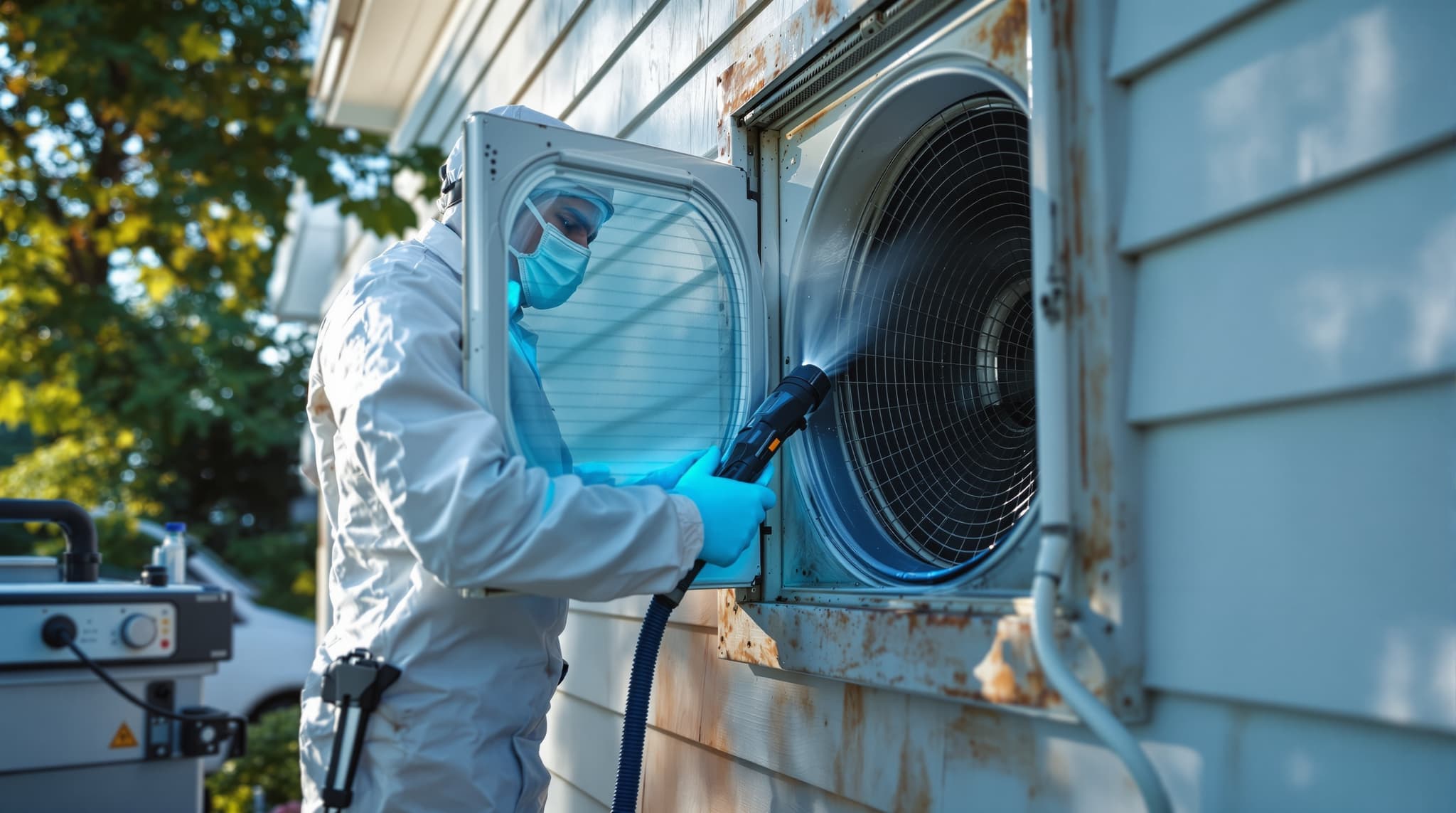
A professional cleaning goes beyond the shop-vac attachment on a Saturday. NFPA-aligned cleaning includes: disconnecting the dryer and cleaning the lint accumulator inside the machine, brushing the full length of the vent from interior to exterior cap, vacuuming debris with HEPA filtration, inspecting and replacing crushed flex duct with rigid aluminum, and certifying airflow with an anemometer at the exterior cap (NFPA target is 3,200+ fpm).
How often
Annually for most Long Island homes. Every 6 months if the run is longer than 25 feet, has multiple elbows, or if you're a heavy laundry household (3+ loads per day). Townhouses and condos with shared roof-cap systems often need quarterly service.
Ready for a free scope?
Every booking includes camera-scope video. Call us to schedule.
or fill out the form, it takes 20 seconds
Schedule a walk-through
Five fields. We take it from there.